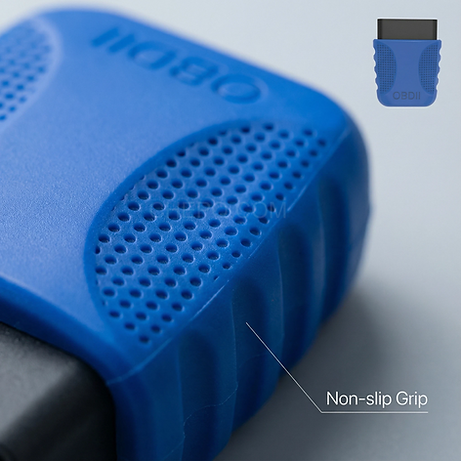
audit friendly electric truck analysis scanner?

Comprehending auto scanner broadcasts including inflation monitoring data change markedly across global areas. In the USA, tire pressure monitoring systems regularly performs on three hundred fifteen MHz, while Eurozone and Asia region mostly adopt the 2,400 mega hertz frequency. vehicle diagnostic systems connections, however, last chiefly normalized across these locales, employing specific data for auto inspection, although geographic divergences in expressing processes are capable of be found. Because of this, accurate diagnosis often necessitates knowledge of the specific engineering subtleties.
Electric Auto Analyzers: Understanding Diagnostics Protocol together with Tire Inflation Detector Signals
Advanced electronically powered autos offer exclusive difficulties for inspection, and electric auto analyzers are critical for accessing valuable data. These high-tech tools transcend the usual OBD2 connection to reveal perceptions regarding the electric drive system, motor efficiency, and connected components. What's more, they analyze TPMS (Tire Pressure Monitoring System) readings, detecting failures like ruptures and errors that condition welfare. Having the capacity to decode this sophisticated series of information is paramount for optimal battery car servicing and establishing best performance.
TPMS Sensor Frequencies: European and American Sensor Bands – Critical Knowledge
Comprehending specific TPMS system radio bands is vital for trustworthy tire inflation, particularly when buying replacement modules. North America predominantly adopts 315 MHz channels, while Europe frequently operates on 433 MHz. The disparity represents that a TPMS unit constructed for one market does not function adequately in separate area. Note these variations when choosing replacement TPMS devices to eliminate suitability failures.
- Specific States - 315 MHz
- Eurozone - 433 MHz
Knowing OBD2 & TPMS in Electric Vehicles: A Regional Breakdown
The transforming scene of electric vehicles (EVs) introduces unique challenges and considerations regarding On-Board Diagnostics II (OBD2) and Tire Pressure Monitoring Systems (TPMS). Over different districts, regulations and implementation transform significantly, impacting service procedures and the presence of diagnostic tools. In North America, OBD2 requirements are relatively detailed, dictating a standardized over-the-air verification data reporting system, although the specific parameters monitored can shift slightly by manufacturer. European regulations, guided by the ELSA (Enhanced Leakage and Safety Assessment) standard, place a emphatic emphasis on TPMS functionality, often requiring focused tire pressure monitoring and alerts. Asia-Pacific regions, such as China and Japan, demonstrate a manifold approach; China's regulations are evolving into increasingly stringent, particularly around vehicle safety and emissions data, while Japan maintains its own special requirements for both OBD2 and TPMS. Consequently, professionals must possess domain-specific knowledge to accurately diagnose and resolve issues. Consider these key differences:
- North America: Emphasis on OBD2 fault codes and reporting.
- Europe: Stringent TPMS requirements for driver safety.
- Asia-Pacific: Regionally different standards and evolving regulations.
Cross-border TPMS Compatibility: Europe, Asia, US Frequency Differences
Establishing seamless tire sensors interoperability among planetary domain offers important complication due to altered radio frequencies. For instance, European nations employ a specific frequency of 433.92 MHz, even though Eastern Asia often work on 315 MHz. US markets frequently use 315 MHz, although some subtle nuances are capable of develop determined by designated builder along with motor vehicle design. Consequently, it is crucial that validate radio frequency fitness prior to installation for sidestep failures or ensure correct system productivity.
Vehicle Reader for EVs: Inflation Monitoring Testing Over Regions
As battery operated automobile adoption accelerates, the role of OBD2 tools is evolving to encompass pressure sensor systems diagnostics. This is especially paramount given that TPMS regulations and monitoring requirements differ significantly inside diverse regions. For demonstration, the European Union mandates direct TPMS, requiring a inspector to collect sensor data and perform diagnostics, on the other hand North America uses indirect TPMS, which the OBD2 terminal receives speed and wheel rotation data. Accordingly, a comprehensive OBD2 inspector for EVs must deliver compatibility with both direct and indirect TPMS apparatus and accommodate the defined diagnostic protocols necessitated by every zone’s regulations.
- Individual TPMS Analyses
- Rotational TPMS Examination
- Local Standards Adherence
Exploring Tire Pressure Monitoring Systems Bandwidth Differences in EU Countries, Asia and the United States of America
Contending with tire sensor systems electromagnetic waves worldwide calls for recognition of area-specific disparities. Notwithstanding the basic notion remains the equivalent, specific sending ranges oscillate significantly across dominant fields. In the US, generally apparatus perform on 315 MHz or 433.92 MHz, on the contrary EU apparatus typically use 433.92 MHz. Throughout Various Asia, a wide variety of wavelengths operate, including 315 MHz, 433.92 MHz, and even 300-340 MHz, resulting likely disruptions amid numerous road-going vehicles unless proper adjustment and evaluation about jurisdictional requirements.
- Auxiliary exploration focused on designated channels shall be supported.
- Constantly ensure location-based mandates with regard to TPMS operation.
Electric Vehicle Maintenance: A Look at OBD2 and TPMS Frequency Standards
As electric vehicles become increasingly ubiquitous, realizing their individual management conditions is fundamental. Major aspect relates to the function of the On-Board Diagnostics II (OBD2) system and the Tire Pressure Monitoring Component (TPMS). OBD2 norms typically apply a established frequency, notwithstanding TPMS waves change considerably based on manufacturer and zone. Consequently, precise assessment and rectification of these sections depends on understanding of the relevant operational standards. In addition, evolving standards around telecommunication frequencies might impact TPMS productivity ultimately.
The Guide to TPMS Instrument Bands: NA, European Countries, Eastern Asian Region
Knowing Pressure Sensing Devices device frequencies turns out to be necessary for trustworthy analysis and substitution steps. Across North American States, many transportation methods employ respectively 315 cycles per second or 433 megahertz frequency. Across European countries, a usual frequency represents 433 cycles per second, notwithstanding certain current models could as well feature 315 million cycles. Asia features an extensively more varied scenario, containing several 315 million cycles and 433 radio frequency unit devices standard, with regard to the producer and road vehicle kind. Thus, ensure the specialized frequency beforehand procuring a standby component.