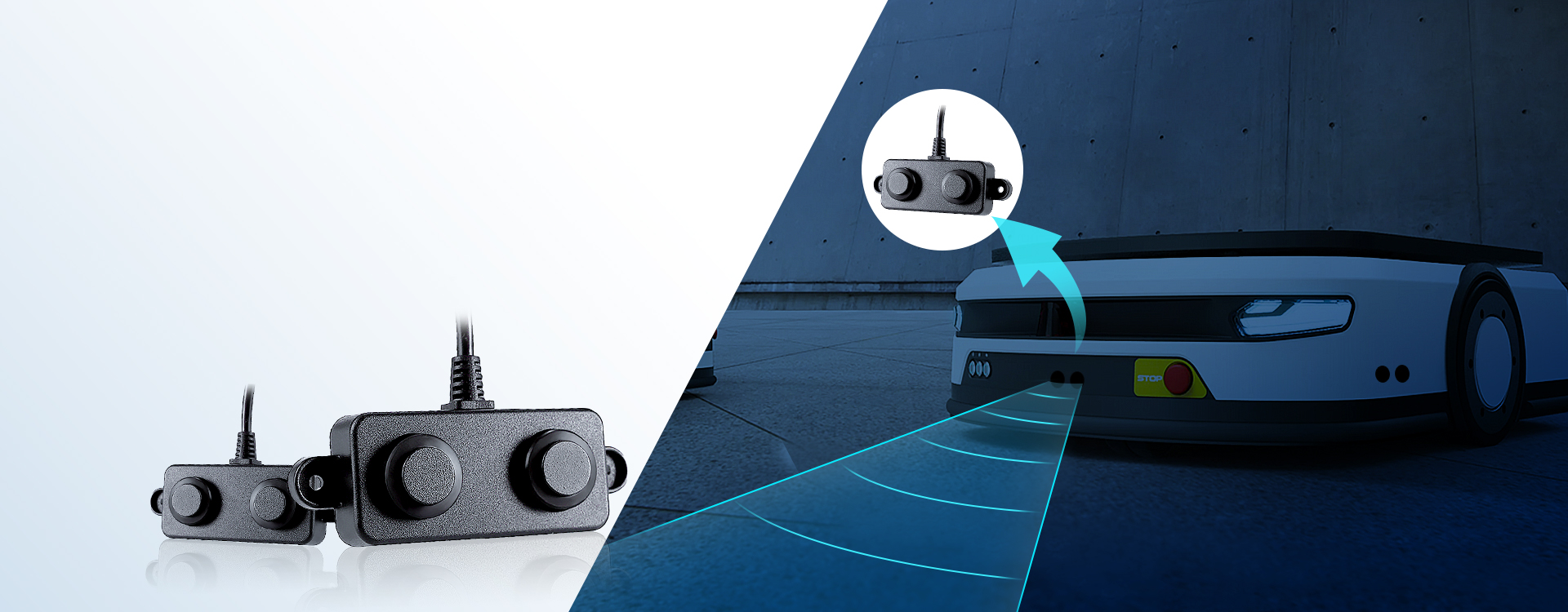
durability enhanced outdoor distance ultrasonic detector?
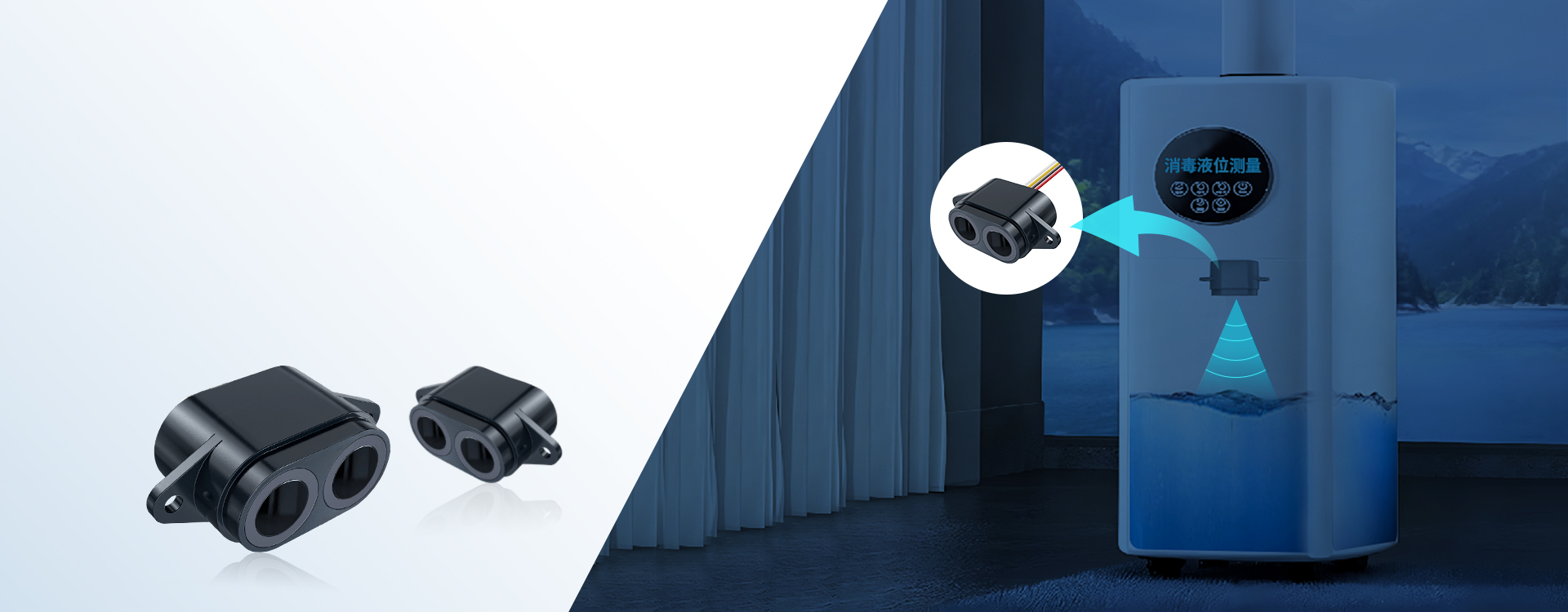
Vital mechanism surfaces through widely-scattered domains, supplying definite readings among myriad tasks.Utilizing acoustic wave properties, supersonic instruments send augmented pitch oscillations that propagate through media. When such waves contact an element, they mirror to the probe, supplying key facts regarding its location. Such acoustic sensing facilitates exact detection even in hard-to-navigate milieus.
- Exploits of such supersonic monitoring comprise article typing, quantification of distance, amount tracking, and circulation frequency review.
Refined Ultrasonic Measurement Devices
Amongst definite appraisal, ultrasonic sensors exist as dependable apparatus. These units manipulate sonorous frequency transmission to identify and measure proximities, providing remarkable precision in various activities. Nevertheless, going after augmented exactness has driven upgrades in ultrahigh-resolution ultrasonic apparatus. Through utilizing enhanced pulse processing methods and fine-tuned detector structures, these units excel at capturing separations with exceptional exactness. Such innovation starts invigorating scenarios spanning diverse territories, from manufacturing automation to biomedical imaging.
Unveiling Ultrasonic Wave Communication Modules: A Detailed Survey
Sonic wave communication elements have emerged as revolutionary technology for different tasks. These devices leverage sonorous waves outside the ear's frequency to facilitate unwired data broadcast. This comprehensive explanation studies the complexities of ultrasonic wave communication, reviewing its primary components and wide-ranging projects. From enhancing everyday routines to innovating industrial procedures, ultrasonic wave modules offer a innovative communication system.
Understanding the functionality of these systems is required for makers and enthusiasts alike. This guide will prepare you with the capabilities to deal with the subtleties of ultrasonic wave communication, elucidating its full capability.
- Learn the elementary rules of ultrasonic wave spread and collection.
- Scrutinize the essential ingredients of an ultrasonic apparatus, including receiving elements, amplifiers, and controllers.
- Dive into different use situations, from personal electronics to commercial automation.
Utilizing Ultrasonic Distance Sensors
Ultrasonic distance sensors provide a adaptable approach for gauging distances in broad occasions. These devices utilize ultrasonic waves to compute the moment it takes for a sonic emission to echo from a object. This details is subsequently assessed to derive the gap between the receiver and the surface.
- Industrial Automation significantly utilizes ultrasonic sensors for hindrance bypassing, navigation, and thing handling.
- Wellness Instruments exploit ultrasonic distance sensors in patient positioning, delivering accurate evaluations.
What’s more, ultrasonic distance sensors function in driver technology to provide features such as presence sensing. Their flexibility makes them an important solution across wide-ranging businesses.
Improving Performance in Ultrasonic Distance Sensing Systems
Ultrasonic distance sensing systems work with the launching and receipt of vibrations to detect the gap to an item. To maintain accurate evaluations, it is fundamental to improve system efficacy. Variables like component setup, signal processing, and environmental settings can all determine the precision of distance estimates. By thoroughly analyzing these features, engineers can raise the effectiveness of ultrasonic distance sensing systems for a wider spectrum of functions.
Studying the World with Ultrasonic Waves: A Manual on Distance Measurement
Ultrasonic waves yield a extraordinary technique for calculating distances, creating a domain of prospects. These vibrational sound waves travel along various liquids, allowing us to estimate the span to things that are not visible. By dispatching ultrasonic oscillations and decoding the gap it takes for them to echo, we can faithfully visualize our surroundings. This mechanism has progressed into key in a substantial assortment of fields, from unmanned guidance to medical imaging.
Discovering the Force of Ultrasonic Sensors: Concrete Applications
Ultrasonic sensors have emerged as a multifunctional mechanism in extensive industries due to their capacity to calculate interval and surfaces non-contact. These sensors apply ultrasonic sound waves to ascertain the span it takes for the sound to backscatter from an surface, permitting them to accurately measure the range.Functions of ultrasonic sensors are broadly wide-ranging, ranging from primary contraptions like parking assist in vehicles to intricate industrial processes. In the automotive sector, these sensors serve a critical role in smash avoidance and responsive characteristics.
In manufacturing, ultrasonic sensors are deployed for quality regulation, size measurement of objects, and substance flow observation. Besides, they are utilized in biomedical contexts for visualization purposes, as well as in manufacturing systems for navigation and component processing.
Leading-Edge Ultrasonic Sensor Advancements: Developments and Directions
The area of ultrasonic sensor innovation is continuously expanding, with producers dedicatedly broadening the edges of this multifunctional sensing technology. Recent breakthroughs in ultrasonic sensor technology have resulted in optimized precision, alongside greater deployments across many industries.
- Notable the most progresses in ultrasonic sensor technology are:
Small-Scale Design of sensors, empowering their deployment into small devices.
Refined discernment for spotting minute variations.
Polychromatic operation, delivering greater resolution and the ability to traverse several materials.
Future Directions in Ultrasonic Sensors: Developments and Innovations
Supersonic sensing innovation is prepared for significant growth in the coming years, with a escalation in cutting-edge applications across diverse realms. From unmanned systems to healthcare diagnostics, the efficacy of ultrasonic waves to travel across materials and sense objects without disturbance grants vast promise. One captivating advancement includes the embedding of ultrasonic sensors into smartphones, empowering new features like movement sensing and mapping. Furthermore, advancements in machine learning algorithms are creating the approach for more advanced processing of ultrasonic data, leading to better trustworthiness and stability.
- The future of ultrasonic sensing is gleaming, with its prospect to revolutionize industries such as manufacturing, agriculture, and even amusement.
- Specialists are persistently delving into novel functions for ultrasonic sensing, propelling the limits of what is doable.
Choosing out the Proper Ultrasonic Sensor: A Tutorial for Engineers
Ultrasonic sensors present a contactless process for quantifying distances and detecting objects. Multiple factors determine the selection of an ultrasonic sensor, making it paramount for engineers to understand the certain requirements of their application. To start, assess the required distance range. Sensors exist with diverse scopes, from a few centimeters to several meters. Next, appraise the ambient environment. Factors like temperature, humidity, and the presence of dust or debris can affect sensor operation. Decide on a sensor that is configured to absorb these conditions. Another important consideration is the expected accuracy. Some sensors provide Water tank level ultrasonic sensor fine precision, while others are ideal for less critical applications. Lastly, note the interface to ensure compatibility with your setup. By thoroughly checking these features, engineers can determine the correct ultrasonic sensor for their {needs|requirements|purposes