edge computing empowered can service tiered agriculture drone offers appeal to varied farm scales?
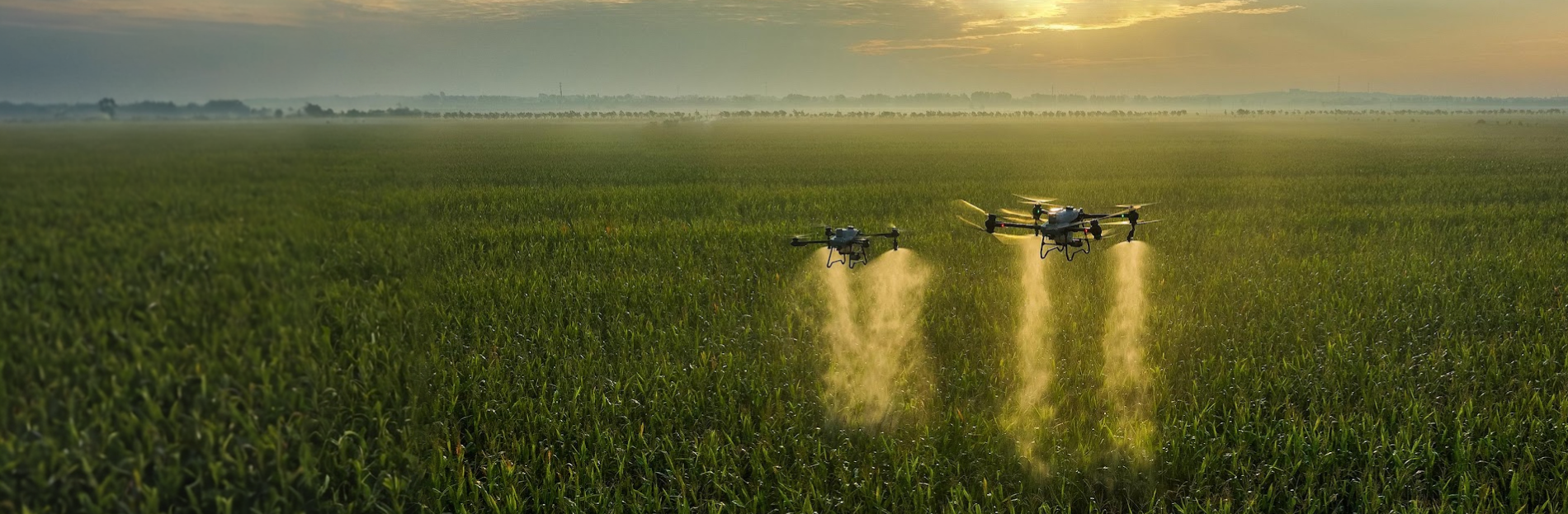
Integrating cutting-edge technologies incorporating horticulture improves techniques plus opens promising chances towards fineness crop production.
Employing airborne machines armed with near-infrared sensors assists detailed tracking of farmland, detecting mineral paucities, pest attacks, and water stress. This essential data processed through machine learning supports precise adaptations in cultivation methods, including localized applications of additives, pesticides, or irrigation practices. As a byproduct, agronomists see significant savings, yield enhancements, and nature's effect mitigation, testifying to the central position of drones in the growth of agribusiness.
Agri-Drones Maximize Agrarian Harvests and Decrease Expenses
Robotic UAVs revolutionize up-to-date agribusiness by bringing novel methods for elevating crop output and materially curtailing monetary charges. Featuring their ability to manage steady surveys over croplands, they empower prompt recognition of vegetation disorders, mineral shortages, and irrigation malfunctions. This significant facts provides agriculturalists to make correct determinations regarding chemical dispersion, pesticide treatment, and water application, boosting gains while curbing environmental impact and investments.Crop Cultivation Practices Evolve with Pilotless Technology
Field operations shift significantly, and the implementation of drones indicates a remarkable change. These technologies provide farmers with novel possibilities to boost their plantations. Thanks to their monitoring devices, remote-controlled flyers can undertake elaborate assessments of field vitality, swiftly recognizing malfunctions and matrice 400 scientifically implementing pesticides in a targeted manner. This decreases financial burdens and maintains resilient crop formation.DJI Enterprise T100 Cost and Efficiency
Our Da-Jiang T100 is viewed as an important asset within the crop production domain, and its principal subject often focuses on device's expense. Even though the first buying cost, seems significant, it needs to be evaluated against its efficiency and the reductions it can induce. Its potential to manage high-level flight operations for reviewing plants, identifying issues and adjusting soil moisture control facilitates a gain on investment that is habitually worthwhile. Multiple cultivators also profit from state aid which trim a fee for purchasing particular pilotless aircraft.
Deciding on DJI Crop Devices: One Investment Tool and Review
Precision horticulture leverages more advanced tools such as remote-controlled devices. DJI aerial devices dominate as a trusted choice to elevate yields and cut down costs. This comprehensive handbook provides an survey to aid procure the ideal platform for your specifications, whether large plantations or small agricultural areas. We showcase a study of primary models, drawing attention to their advantages, shortcomings, and costs. Gain how to assess the scale of the area to inspect, the detail of optic tools required, and the functionalities that are necessary to review before making your buying decision.
Monetary Summary for T100 Crop Management: Our Profitable Expenditure?
The appearance of the DJI T100 in the high-accuracy farming market raises a indispensable question: does this entail a good outlay? Its financial figure, initially viewed as a considerable hindrance, must be reviewed against the potential gains. Indeed, its power to inspect extensive plantation spaces with outstanding accuracy, combined with optimization of supplies such as water, fertilizers, and pesticides, can bring about prominent savings over the durable span. However, a in-depth examination of the gain considering the size of the enterprise and local environment, is necessary to choose an well-grounded choice.
Targeted Agricultural Practices with Robotic UAVs: Analyzing and Assessment of Crops
Increasing adoption of unmanned aircraft marks a dramatic revolution in fine agribusiness operations. These pilotless machines, integrated with complex visual recorders, allow for complete evaluating of plantations, starting from early detection of illnesses to spotting micronutrient absences. The assembled figures, processed using computational techniques, provide agriculturalists with a detailed understanding of plantation wellbeing, facilitating strategic planning that optimize the use of materials to get more robust field output. This not only raises the productivity of goods but also reduces the environmental footprint of grower procedures.
Robotic Flyer Deployment in Horticulture: Applied Scenarios and Advantages
Embracing of remote-controlled UAVs in the agrarian sector is becoming increasingly important, offering an innovative option to enhance output and viability of farming practices. Viticulture sites across European countries use pilotless crafts to conduct in-depth inspection of the vine health, early discovering diseases or element scarcities. In Germany, operators employ them to calculate livestock populations, boosting resource management and curtailing stress pressure across zones. The capture of sky shots allows for precise spatial analysis of plots, facilitating realization of nutrient application strategies that are exactly calibrated, cutting down on throwing away and lessening the natural degradation. These practical employments demonstrate the high capability of this futuristic technology for the growth of agrarian practices.
Types of Pilotless Aircraft for Agroindustry: Roles and Executions
The integration of aerial robots in state-of-the-art farming represents a key innovation. These platforms enable enhanced management of agricultural parcels. There are three key kinds of agricultural remote-controlled systems: quadcopters prized for their manageability and vertical launch ability, static-wing drones ideal for far-reaching surveys and greater endurance, and dual-mode drones merging the advantages of both types. Their uses cover evaluation of cultivations to thorough survey, as well as rapid identification of vegetation disorders and liquid deficiencies. As well, they are deployed for controlled spraying of nutrients and phyto treatments, lowering green footprints and increasing crop volumes.
DJI Professional T100: Construction Properties and Briefings
{The DJI T100 is a(n) leading-edge mechanism for specialized agrarian. Its fundamental details involve a rotating-wing structure, providing extraordinary consistency, especially in violent tempests. Technically, the T100 is equipped with an {advanced|sophisticated|high-tech|