How does standardizing tpms sensor frequency europe north america benefit regional distribution centers?

Beginning
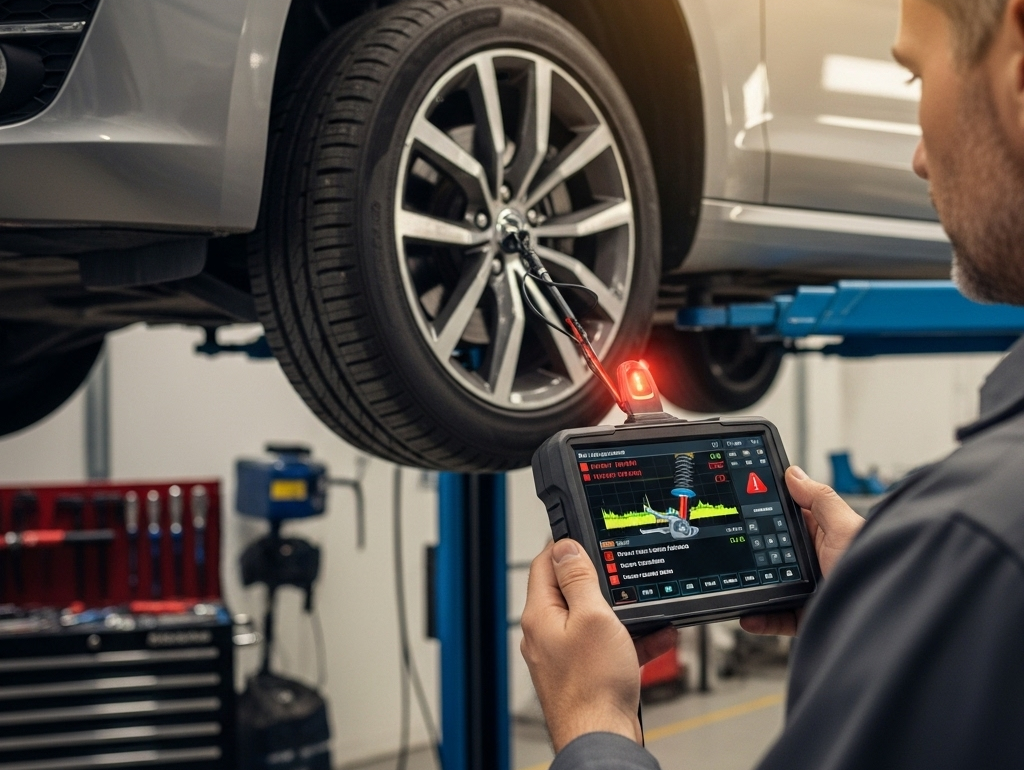
Complete surging sophistication inside up-to-date machines asks for an extensive familiarity of diagnostic procedures, particularly about On-Board Diagnostics II (OBD2) and Tire Pressure Monitoring Networks (TPMS). Within Europe, Asia, and the US, these advancements carry out using alternative frequencies. OBD2 protocols are largely harmonized globally, primarily utilizing ISO 9141-50, KWP2000, CAN, and others, but regional implementations can present minor differences. TPMS, however, is where significant frequency discrepancies arise. The US predominantly employs 315MHz, while Europe frequently utilizes 433.92MHz, and Asia exhibits a more uneven range including both frequencies and ancillary bands. So, valid diagnostic machinery must be armed with the capacity to process these various frequencies to facilitate effective resolution and maintenance.
Deciphering TPMS Sensor Frequencies: A Global Guide (Europe, North America, Asia)
Apprehending tire observing unit (TPMS) transmitter frequencies along the earth can be hard. Ordinarily, North territories mainly utilize 315 MHz, although some current vehicles exploit 433 MHz. On the other hand, Europe and most of Asia mostly serve on the 433 MHz range, with some territorial variations present significantly in distinct Asian regions. It's, pivotal to authenticate the correct radio frequency in advance of buying TPMS readers to confirm suitability and circumvent probable issues.
Electric Vehicle Scanners: OBD2 Compatibility and TPMS Integration
State-of-the-art electrified vehicle testing devices are increasingly featuring necessary functionality, especially centered on both typical On-Board Diagnostics II (OBD2) compatibility and Tire Pressure Monitoring System (TPMS) union. Many EV transport units utilize OBD2 ports for fetching necessary system metrics, permitting technicians and possessors to recognize anticipated glitches. Furthermore, flawless TPMS association provides true tire load outputs, assisting to amplified safeguarding and gas optimization. This blend of OBD2 inputs and TPMS support demonstrates a consequential improvement in electronically powered motorcar maintenance.
Tire Pressure Frequency Inequalities: Eurasia vs. American Continent vs. Asia - A Thorough Evaluation
Numerous technologies responsible for observing tire compression—TPMS—operate on distinct radio wavelengths, leading to considerable regional discrepancies. North America predominantly utilizes 315 MHz, though some modern vehicles are shifting to 433 MHz. European Union mandates 433.92 MHz, a particular frequency to preserve alignment across domains. The East exhibits a multifaceted landscape, with specific zones using 315 MHz, others 433 MHz, and still different nations employing a blend of both. This variation leads to challenges for auto shops and drivers when dealing with replacement TPMS units or diagnostic devices, calling for careful validation of regional criteria to circumvent errors and establish proper serviceability of the TPMS.
Auto Scanners for Battery-Powered Autos: Tire Pressure Monitoring System Examination & Radio Wave Processing
Current car inspectors are continually advancing to serve energy-based automobiles, chiefly involving tire data systems examination. Unlike combustion-based rides, battery-powered automobiles present uncommon obstacles when it comes to tire surveillance analysis. Many EVs use diverse tire monitoring radio bands requiring the scanner to unerringly process the wavelength in use. This capability allows professionals to purely see tire info but also ascertain the particular band being broadcasted by the pressure detection modules, supporting in accurate evaluation of failures.
Europe Tire Pressure Monitoring Systems Signals: Do You Should Be Aware Of?
Dealing with the world of car TPMS can be a headache, primarily due to the varying signals utilized across Eurozone, Asia, and the United States. Western European vehicles predominantly use 433.92 MHz, while Asian countries employ 315 MHz and 433.92 MHz, creating a thorny situation for installers. In the US, both 315 MHz and 433.92 MHz are ordinary, with 315 MHz being more commonplace. Therefore, understanding these regional contrasts is vital for accurately managing TPMS malfunctions and selecting the adequate programming tools.
Advancing each Core Principles: OBD2, Energy-Powered Cars, combined with Tire Pressure Monitoring System Apparatus Rate Determination
For professional mobile unit engineers, exclusively fathoming the foundations involving on-board diagnostics, energy-based vehicle networks, in addition to tire sensor systems gadget channel recognition embodies specific vital progressive increment. These fields penetrate inside standard techniques, entailing particular equipment along with ability allowing accurately locate plus remedy tricky issues concerning rubber systems, charge network output, or powertrain error indicators. What's more, appropriately diagnosing pressure detection transmitter frequencies – which differ across specific brands even types – usually indispensable to effective pairing.
Electric Auto Inspection: Using OBD2 Scanners to Troubleshoot TPMS
Inspecting Tire Pressure Monitoring Systems wheel pressure systems in electric vehicles electrified transports often calls for more than merely visual inspection. Modern OBD2 scanners offer considerable ability to retrieve TPMS data and pinpoint potential issues. Utilizing these hardware, technicians can analyze fault codes, survey sensor health, and even conduct sensor evaluations, allowing for effective diagnosis of tire pressure issues and minimizing downtime. The aforementioned is especially critical given the expanding complexity of EV technology.
Understanding Tire Monitoring Channels: A Hands-on Manual for Europe, Asian Continent, and American Continent
Efficiently utilizing pressure detection units across the span of Eurozone, the Asian Region, and The Americas entails a detailed proficiency of the fluctuating broadcast ranges they employ. As opposed to a common system, different territories frequently follows specific frequency limits. Namely Europe predominantly depends on 315 MHz range and four-three-three point nine two MHz, tpms sensor frequency europe north america while the US & Canada often employs three-one-five MHz though several fresh models may hold 433.92 Megahertz. Far East presents a broader variety scenario, with numerous frequency limits used, according to the specific country and automobile producer.
- Regard area rules regarding signal transmission.
- Seek out your user guide for detailed frequency.
- Utilize a monitoring device specialized in evaluating various waves.