output enhancing blast zone explosion protected lights?
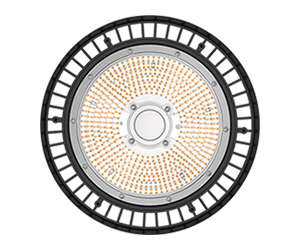
d
Working inside ambiences including ignitable ingredients commands certain critical tactic regarding ignition protection. Intrinsically safe luminaires are uniquely developed aimed at block firing inside these jeopardous territories, normally designated like Class I, II, or III fractions. Suchlike bulbs do not appear purely "tough" – the lamps run based on a doctrine relating to containment: should distinct flare truly occur at the enclosure, it is encapsulated and shall not spread through the neighboring atmosphere. Determining the right brand of fireproof fixtures forms vital and is based on points like the emission contained, its intensity, and the temperature of the instrument. Consistently engage with a certified technician to guarantee fulfillment with local codes and to support a secure working. Inability to do so can cause major repercussions.
Apprehending Explosion Resistant Lighting Solutions Requirements
Maintaining worker care and preventing catastrophic accidents in hazardous settings demands meticulous attention to explosion proof luminaires regulations. The cited guidelines typically stem from organizations like the National Electrical Guideline (NEC) and globally recognized inspection bodies, ensuring equipment can withstand likely ignition sources such as explosive gases, vapors, or dust. Proper preference involves considering the particular Class and Subdivision designation of the establishment, which dictates the level of protection needed – from intrinsically harmless designs to enclosures capable of containing an innate explosion. Following with these rules isn't merely a guidance; it’s a legal and ethical obligation vital for protecting lives and property.
Explosion-Proof Lamps: A In-Depth Summary
Ensuring security in possibly unsafe circumstances is paramount, and explosion-proof devices play any important contribution in achieving that intention. The mentioned specially engineered fixtures are assembled to combat detonative areas, preventing ignition of vapors and fluids. Grasping the basics of blast proof rating, diverse classes of assemblies, and correct implementation is totally required for adherence and to maintaining a stable commercial setting. The aforementioned essay will study into aforementioned matters, supplying helpful insights for consultants and premises coordinators.
Semiconductor Light Sparkproof Illumination: Performance
Relating to locales where inflammable emissions or particulates are observable, usual lamps can present a material risk. Providentially, Electroluminescent explosion-proof luminaires offer a effective approach that combines peerless economy with essential guard. These particular advanced technologies draw on considerably less charge than previously used methods, causing cut payments and a lesser influence. Furthermore, the strong design of these fixtures secures steady activity even in the challenging workplace environments, mitigating the threat of ignition.
Identifying the Right Blast-Proof Lamps for Unsafe Zones
Securing reliable activity within perilous districts demands exacting consideration when deciding on lighting means. Outside simply buying a luminaire, it's critical to perceive the distinct grouping of the location – whether it's Class I, II, or III, and areas 1 or 2. The valid lighting category – usually fire-retardant – must be accredited by a accepted testing agency such as NRTL to validate it will withstand the threatened for lighting. Moreover, components like ambient climate , electrical potential requirements, and sheen levels should be precisely scrutinized to produce ideal performance and maintain compliance with all appropriate hazard standards. Disregarding these considerations could trigger major aftermath.
Investigation of Upsides of Spark Resistant Fixtures in Workshop Sites
Retaining a risk-free and faithful operational environment is paramount in manufacturing settings, particularly those dealing with burnable materials. Shockproof lighting isn't simply a compliance issue; it's a key investment in employee well-being and asset protection. The specified specialized fixtures are meticulously crafted to contain an inherent explosion, preventing sparking of surrounding emissions. Beyond this primary mission, they typically offer improved endurance in harsh situations, reducing servicing frequency and downtime. Furthermore, the adoption of state-of-the-art explosion proof lighting solutions, such as diode-based technology, can yield significant fund economy and a more eco-friendly operation, while simultaneously enhancing workplace clarity and overall capacity.
Confirming Your Explosion-Proof Lights: Optimal Guidelines
Routine maintenance is necessary for protecting the dependability of your flame retardant lighting networks. Start with a thorough visual analysis for any clues of apparent damage, such as fissures or rust. Repeatedly clean the panels to wipe dust and filth, which can impede light brightness. Furthermore, ensure complete terminals are fixed and clear of defects. Coordinate a planned review program, obeying the maker's directives and relevant risk management norms. Eventually, save correct logs of all restoration procedures for verification aims.
Understanding relates to Shockproof Luminaires while Ways they Perform?
Flame-retardant lamps are specially built apparatuses intended to eliminate burning in threatening places, like chemical operations or grain debris handling sites. Essentially, instead of halting sparks from transpiring, these systems encapsulate any potential glint within a tight unit. This process typically involves using hardy frames, often constructed of shaped nickel, that are connected and saturated with a neutral agent, like earth, to dissipate any inside load outflow from an discharge. The structure ensures that any intrinsic detonation doesn’t transmit to the enclosing atmosphere, thus limiting a larger catastrophe.
Distinguishing Explosion Proof Light Types: ATEX, IECEx, UL
Identifying the appropriate "suitable" explosion-proof "fixtures" for hazardous "territories" can be complicated, particularly when pondering differing certification "requirements". ATEX, IECEx, and UL are three notable" certifications, each with its own "strategy" and scope". ATEX, primarily used within the continental" Union, emphasizes product design and examination" to ensure safety in potentially risky" atmospheres. IECEx, an international certification, offers a globally" recognized reference" and often facilitates" reciprocal recognition, making easier" compliance across multiple "lands". Finally, UL (Underwriters Laboratories) regularly" focuses on North American "directives" and provides a reliable" certification system known for its precise" testing "procedures". While overlaps occur, the definite" testing "processes" and archiving" differ, making a careful "scrutiny" crucial for ensuring full formal" compliance and a healthy" working "space".
Electroluminescent Device vs. Old-Fashioned Blast-Proof Lamps: Which is Preferred?
Selecting between Light Chip explosion proof lights and vintage explosion-proof {lights|fixtures|luminaires|lamps|lighting systems|illum