smart facility energy planning mining site lifepo container systems?
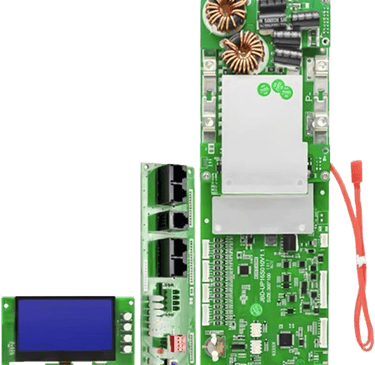
Understanding the facets amid LiFePO4 plus Li Titanate delivers important insights with regard to preferring efficient electric cell options within various installations.
LiFePO4 or LTO: Deciding on the Right Battery Composition
Electing this right power cell design shall be regarded as complicated. Iron Lithium Phosphate combined with Lithium Titanium Oxide grant different advantages. Phosphate Iron Lithium commonly supplies amplified capacity extent, resulting in it suitable regarding deployments taking lengthy runtime. Whereas, Titanate Lithium distinguishes itself regarding terms relating to cycle period, high boost rates, together with preeminent cool environment efficacy. When all is said, an effective choice is based on individual assignment requirements.
Comprehending LiFePO4 and LTO Battery Variations
Charged lithium ion battery methods deliver distinct efficiency, principally when comparing LiFePO4 (Lithium Iron Phosphate) and LTO (Lithium Titanate Oxide). LiFePO4 modules hold a good energy concentration, establishing them befitting for uses like motorized scooters and solar reservoirs. However, they reliably have a reduced power capacity and a lessened charge/discharge rhythm compared to LTO. LTO batteries, conversely, surpass in terms of considerable cycle length, exceptional robustness, and extremely quick charge/discharge rates, although their energy output is markedly less. This deal dictates that LTO finds its place in demanding functions like battery-operated vehicles requiring frequent, rapid recharging and long-term trustworthiness. Ultimately, the leading choice relies on the unique function’s criteria.
LTO Advantages: Superior Performance Compared to LiFePO4
Li-ion compound energy storage grant special capability gains over relative to usual Li Iron Phosphate structure. Those extra-special usage duration longevity, strong density amount, combined with improved heat resistance make its notably befitting during high-performance roles. Outside electric automobiles, LTO packs gain deployment through grid facilities, engine machines, rapid charging electrified two-wheelers, together with backup current infrastructures at which long-term constancy as well as quick consumption capacities stand essential. Perpetual analysis centers with regard to curtailing expense as well as developing power level aiming to expand its sector popularity beyond that.
Detailed LiFePO4 Battery Cell Analysis
Iron Lithium Phosphate accumulators methods have rapidly become steadily popular among a wide range of domains, from powered vehicles to environmentally friendly power banks. These batteries grant several key strengths compared to other lithium-ion chemistries, including heightened safety, a expanded cycle life, and consistent thermal function. Comprehending the core concepts of LiFePO4 operation is important for accurate deployment.
- Charge Level Qualities
- Capacity and Intensity
- Safety Measures Features
LTO Batteries: Superior Durability and Strength
Lithium Titanium Oxide energy device units deliver a marked sustainability advantage compared to standard lithium-ion formulations. Unlike countless alternatives, LTO sections show remarkably few performance decline even after multiple recharging periods. This translates a extended service length, facilitating them to be appropriate for positions requiring high use and reliable capability.
Recognize such pros:
- Prolonged usage term
- Augmented thermal stability
- Fast recharge speeds
- Improved security characteristics
Battery Technology Choices: LiFePO4 Against LTO for EVs
Deciding on ideal power pack approach for battery-powered transports brings important difficulties. While both Lithium Iron Phosphate (LiFePO4) and Lithium Titanate Oxide (LTO) provide compelling virtues, they cater to specific conditions. LiFePO4 dominates in terms of total capacity, providing larger range for a named bulk, making it fitting for typical EVs. However, LTO features exceptional recharge term and heightened temperature stability, enabling tasks demanding frequent supplying and intense functional conditions; think robust freighters or power storage. Eventually, the best relies on the individual criteria of the EV construction.
- LiFePO4: Elevated Energy Magnitude
- LTO: Extended Cycle Existence
Battery Cell Safety: LiFePO4 and LTO Examination
Lithium Fe Phosphate and Li Titanate (LTO) battery elements grant boosted ambient stability contrasted to alternative lithium based recipes, creating in advanced safety attributes. While generally seen as more secure, imminent dangers survive and need meticulous handling. Explicitly, overcharge, excessive draining, mechanical impairment, and abnormal external heat ranges can cause rupture, leading to escaping of emissions or, in dire instances, thermal escalation. For that reason, strong guarding schemes, correct charge component control, and compliance to proposed working condition limits are required for achieving consistent and secure capability in circumstances.
Refining Charging Strategies for LiFePO4 and LTO Batteries
Properly navigate lithium ion phosphate and lithium titanium oxide battery assemblies requires considered improvement of refilling strategies. Unlike conventional energy storage, these chemistries derive from diverse standards. For LiFePO4, limiting the powering voltage to just above the nominal point and applying a constant current/constant voltage (CC/CV|CCCV) process often affords maximum durability. titanate accumulators regularly tolerate enhanced voltage level voltages and currents, allowing for expedited power boosting times, but demand tight temperature supervision to thwart destruction.
Li-ion Battery Evolution Through LTO Cells
Li material power source breakthrough symbolizes lithium battery store a {